
Our
Mission
Women in Computer Architecture (WICARCH) is designed to create a community for women studying and working in the field of computer architecture. Our goal is to promote women in computer architecture and increase visibility for their research and development contributions. We welcome participation from all women including students, post docs, industry researchers and developers and faculty members. To be listed in our directory, please click here.
Profiles of WICArch
The mission of this section is to profile women in computer architecture across many walks of our field, from [junior, senior] x [industry, academia].
If you would like to be profiled, would like to nominate someone to be profiled, or would like to write a profile, please let us know by wicarch-chair@acm.org
Mengjia Yan

Dr. Mengjia Yan is undoubtedly one of the most delightful people you will ever meet – smart, positive, exceedingly wise beyond her years, and the kind of person who can turn a frown upside down. She was paired with me as a mentee at ISCA 2018, but I genuinely think that it is I who have benefited from the relationship. These days, she is a new assistant professor at MIT, having recently completed her PhD at the University of Illinois at Urbana-Champaign in 2019.
WICArch Directory
We actively maintain a list of women working in the field of computer architecture. The goal of this list is many-fold. First, the list services as a resource for program chairs and conference organizers to identify women to serve in key technical roles such as keynote, panels and program committees. Second, the list is designed to foster community and help women connect with other women in computer architecture. This list can be used by current and potential graduate students to find advisors and mentors. Four profiles, selected randomly, are shown below. We encourage you to browse the full directory.

Newsha Ardalani
Research Scientist
Meta AI (FAIR)
(No URL)
My research interest lies at the intersection of data, ML and system. At Meta AI, I'm exploring limits of scaling for many SOTA models.
Architecture For Emerging Technologies and Applications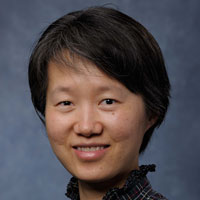
Jun Yang
Professor
University of Pittsburgh
(No URL)
Jun Yang is a William Kepler Whiteford Professor of Electrical and Computer Engineering Department at the University of Pittsburgh. Prior to joining the University of Pittsburgh, she was an assistant professor of the Computer Science and Engineering Department at University of California, Riverside. Jun received her bachelor from Nanjing University, China, and her PhD from the University of Arizona in 1995 and 2002 respectively. Jun’s research is in the broad area of computer architecture and her recent focuses include GPU designs, architecture level security, emerging memory technologies, 3D integration, and power and thermal management techniques. Jun is a recipient of NSF CAREER award in 2008, IEEE MICRO Top Picks award in 2010, and best paper awards of ISLPED 2013 and ICCD 2007. She was on the editorial board of IEEE Computer Architecture Letters, and she has served in the Organizing and Technical Program Committee in ISCA, MICRO, and HPCA, for many years. She has been included in the HPCA hall of fame since 2017.
Architectural Support For Programming Languages Or Software Development, Architectural Support For Security Or Virtualization, Architecture For Emerging Technologies and Applications, Architecture Modeling and Simulation Methodologies, Dependable Architecture, Effects Of Circuits Or Technology On Architecture, Instruction, Thread and Data-Level Parallelism, Multiprocessor Systems, Processor, Memory, and Storage Systems Architecture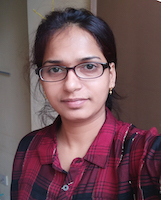
Khushboo
Post Doctoral Fellow
University of Florida, Indian Institute of Technology Guwahati
Personal URL
Thesis Title: LongLiveNoC: Wear Levelling, Write Reduction and Selective VC allocation for Long lasting Dark Silicon aware NoC Interconnects
Increasing processing demand has led to the development of chip multiprocessors which can have multiple to many cores connected with each other and with the on-chip caches. These connections are established by an on-chip packet-switched Network-on-Chip (NoC). Scaling of technology nodes increases the power dissipated by the chips leading to thermal restrictions. To control the chip thermal design power, certain components (like cores and caches) may be turned off. However, in this scenario of dark silicon, the interconnect is expected to be available.
The thesis aims to save power consumed by this always ON interconnect by replacing the power-hungry SRAM buffers in the routers with low leakage Non-Volatile Memory (NVM) based buffers. However, the major challenges with the employment of the NVMs are slower writes and weak write endurance.
The thesis proposes:
1. Methods to evenly distribute the writes across these NVM buffers in order to increase their lifetime. This is done by static and dynamic allocation of buffers to the virtual channels and their selection during packet transmission.
2. Power can also be saved by using frequency scaling of the routers and/or turning off certain buffers when the usage is less. The investigation is done for all such approaches and power savings are demonstrated.
3. Endurance can be improved and energy can be saved if we can reduce the number of writes performed on the buffers. This is achieved by proposing two compression techniques leading to reduced network traffic and improved lifetime.
All the above methods help in improving the lifetime of the NVM based NoC interconnects in the context of dark silicon.
Architecture For Emerging Technologies and Applications, Interconnection Network, Router and Network Interface Architecture, Multiprocessor Systems, Processor, Memory, and Storage Systems Architecture
Radha Venkatagiri
PhD Candidate
University of Illinois at Urbana Champaign
Personal URL
I am a PhD candidate at the University of Illinois at Urbana-Champaign. My advisor is Prof Sarita Adve. My research interests include Error-Efficient Computing, Approximate Computing, Hardware Resiliency and Software Testing. The overarching theme of my dissertation work is enabling reliable, low-cost and efficient computing by allowing controlled errors in the system. My work aims to explore such opportunities in emerging workloads and build an ecosystem to formalize and automate the application of error-efficient computing techniques. I am among the young researchers selected to participate in the 2018 Heidelberg Laureate Forum.
Before joining UIUC, I was a CPU/Silicon validation engineer at Intel for five years, where I won a divisional award for key contributions in validating new industry standard CPU features. Prior to that I worked for 1.5 years at Qualcomm on the architectural verification of the Snapdragon processor. I completed my MS in ECE from North Carolina State University. My undergraduate degree, in Electrical Engineering, is from the University of Madras in India.
Architecture For Emerging Technologies and Applications, Dependable ArchitectureInitiatives
We organize various initiatives to better connect women in computer architecture.
Join Our Mailing List
2. Update your gender in your myACM account (create/activate account as needed)
Join Our Slack Channel
We offer an informal mentoring program through our slack channel (wicarch.slack.com). Women at all career stages are encouraged to join. The mentoring program provides an easy way to connect with other women and receive advice on a wide range of career and personal issues.
If you need assistance in joining our mailing list or slack channel, please send email to wicarch-chair@acm.org.
This website serves women in the field of computer architecture.
© 2021 SIGARCH.