
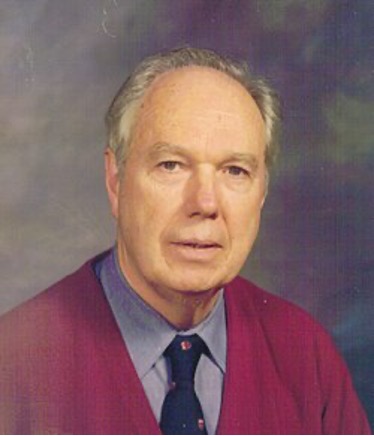
Michael J. Flynn is a widely respected contributor—indeed a giant—in the field of Computer Architecture. He made highly significant and impactful contributions throughout his career, both in industry and in academia. Sadly, he passed away peacefully December 24, 2025, having lived a long and full life.
Born May 20, 1934, in New York, NY, Flynn earned his Bachelor’s, Master’s, and Ph.D. degrees in Electrical Engineering from Manhattan College (1955), Syracuse University (1960), and Purdue University (1961), respectively, and he received an honorary Doctor of Science degree from the University of Dublin (1998). After ten years as a design engineer and project manager at IBM (1955-65, in Endicott and Poughkeepsie, NY), he became a member of the faculty at the University of Illinois at Chicago (1965-1966), Northwestern University (1966-1970), and Johns Hopkins University (1970-1975) before joining Stanford University in 1975 as Professor of Electrical Engineering. He taught internationally, in Ireland, other places in Europe, Singapore, and Japan.
As a young project manager at IBM, Flynn was responsible for the design of the well-known IBM System 360 (Models 91/92/95 series), the first computer to implement the sophisticated Tomasulo algorithm, along with many other groundbreaking high-performance architectural techniques. As the first family of general-purpose computer mainframes that featured architectural compatibility for both commercial and scientific applications, the System 360 is widely recognized as revolutionizing computing during that time—and in many ways persisting even today. Indeed, many of the high-performance computing techniques developed by Flynn and his IBM colleagues are used throughout the industry today, having migrated from barn-sized mainframes to finger-nail sized microprocessor chips. Flynn also was the first to shed light on the performance potential and limitations of parallel computers with what’s become known as Flynn’s classification (or Flynn’s taxonomy), a pioneering framework for categorizing parallelism in computer architectures based on the number of simultaneous instruction streams and data streams they handle, e.g., SISD, SIMD, MISD, and MIMD. His original taxonomy is still used widely today, with various extensions derived from it, to distinguish between different kinds of parallel processor computer systems.
In 1972, together with some colleagues from IBM, Flynn co-founded Palyn Associates which provided consulting services in the field of high-performance computer architecture and design. For more than 30 years, he and his colleagues advised nearly every major computer company in Japan, Europe and the United States, including IBM, CDC, Fujitsu, Hitachi, Honeywell Bull, and ICL. Later, he played a prominent role in Maxeler, products of which made use of advanced dataflow techniques to provide high performance processing for specific applications, such as automated trading. As a renowned professor at Stanford until his retirement in 1999 and transition to emeritus status, Flynn made seminal contributions to instruction set architecture (ISA), computer arithmetic, advanced floating-point design, multimedia, parallel processors and interconnects, emulation, and performance evaluation, to name a few. He (co-)authored several textbooks, including Introduction to Arithmetic for Digital Systems Designers, Computer Architecture: Pipelined and Parallel Processor Design, and Advanced Computer Arithmetic Design. An IEEE Fellow, ACM Fellow, and Fellow of the Institution of Engineers of Ireland, Flynn received numerous other honors and awards for his impactful technical contributions, including the ACM/IEEE Eckert-Mauchly Award (1992), IEEE Computer Society’s (CS) Harry Goode Memorial Award and Medal (1995), the Tesla Award and Medal from the International Tesla Society in Belgrade (1998), IEEE CS Charles Babbage Award, IEEE CS Computer Pioneer Award (2015, his acceptance speech video is here), and many others.
Notably, when the field of computer architecture was still in its infancy more than fifty years ago, Flynn founded the IEEE CS Technical Committee on Computer Architecture (TCCA) and ACM’s Special Interest Group on Computer Architecture (SIGARCH); he also started the ACM/IEEE International Symposium on Computer Architecture (ISCA), co-sponsored by both, which is among the most prestigious flagship computer architecture conferences in the world. At ISCA’s 50th anniversary conference at FCRC 2023, Flynn was invited to give a “50 Year Retrospective Lecture” and was given an honorary plaque with these words inscribed: “In recognition, with tremendous gratitude, of your lifetime dedication and leadership to the computer architecture community on this the 50th anniversary of your founding of ISCA, SIGARCH, and TCCA.”
Even more than his impressive technical contributions, which are many, Flynn is remembered fondly by the many dozens of doctoral graduate students he advised—for his unending kindness, wealth of wisdom, caring tutelage, gentle encouragement, constant motivation, and enduring support, especially when most needed. He treated each and every student as if they were a member of his own family, and he was viewed by them not only as their academic “father,” but referred to affectionately as “the Great Man.” Many of his former mentees returned to Stanford several times each year for luncheons to enjoy his company and reminisce about exciting times working with him in tackling some of the most compelling technical issues of the day.
Flynn was an equally generous mentor to his junior faculty colleagues, helping them establish their careers and providing sage advice as they made their way. Kunle Olukotun attests to this: “Meeting Mike Flynn near the end of my Ph.D. at the University of Michigan changed the trajectory of my career. At the time, I was firmly on a path toward industry, but Mike believed that I could be a strong academic, and he encouraged me to apply to Stanford. Mike saw something in me that I did not yet see in myself, and that confidence made an enduring difference. Once I arrived at Stanford, Mike served as my mentor. He helped me navigate the academic waters with thoughtful and wise advice, provided opportunities to showcase my research, and supported me through nominations for awards and professional recognition. I am deeply grateful to Mike for all he did to help establish my career, and for the role he played in the success of so many other junior colleagues whom he mentored with the same generosity and vision. I am deeply saddened by his passing.” Similar sentiments are echoed by Bill Dally, who shares the following: “I first met Mike as a graduate student at Stanford in 1980. I was awed by his accomplishments and his understanding of parallel computing. He kindled my interest in parallel computing which launched me on a very successful career. Later, when I came to Stanford as a faculty member in 1997, I found Mike to be a great source of advice about Stanford, being a faculty member, research strategy, and many other topics. I am deeply saddened to hear of Mike’s passing. He will be greatly missed.” Another of his faculty colleagues at Stanford, Christos Kozyrakis, recalls the following: “One of the most memorable moments of my early teaching years was hosting him in class to discuss the Flynn taxonomy of computer architecture—a special experience for both the students and myself and a vivid reminder of the lasting impact of his work.” Indeed, Mike Flynn was highly respected and revered by fellow colleagues all throughout his professional career. Solemnly noted by John L. Hennessy, “Mike was the person who hired me at Stanford, gave me some of my first research funding, jointly published an early paper with me, and gave me my first consulting opportunity. Sadly, his passing marks the end of an important era in computing: Mike was the last of the great System 360 pioneers—Gene Amdahl, Bob Evans, Fred Brooks, Eric Bloch, Gerry Blaauw, and Robert Tomasulo—all are now gone.”
He was a wonderful human being.
Professor Michael J. Flynn will be sorely missed by his loving family as well as by his extended academic family and all those whose lives he has indelibly touched over his blessed ninety-one plus years. May he rest blissfully in peace, and may his venerable legacy be inspirational and long lasting. Fittingly, through Mike Flynn’s final public words to all of us in the computer architecture community in his ISCA 50th Anniversary Lecture, he exhorted us all by saying: “Now it’s your turn!”
About the Authors:
Ruby B. Lee is the Forest G. Hamrick Professor Emeritus in the ECE department at Princeton University, and chief architect at Hewlett-Packard in Silicon valley before that. She is a Fellow of the IEEE, ACM and the American Academy of Arts and Sciences, and recipient of awards such as the most Influential Paper award in 20 years at ISCA 2025 and the Test of Time award at the ACSAC 2024 security conference. Her research combines cyber security, computer architecture and deep learning, including secure processor and cache architectures, attacks and defenses, low-cost AI and multimedia.
Charlie Neuhauser is now retired after more than 50 years in the field of computer design and analysis. During the latter half of his career, he provided technical insight to attorneys and companies in the area of intellectual property. He is currently the registration chair for the IEEE Hot Chips Symposium.
Timothy M. Pinkston is the George Pfleger Chaired Professor of Electrical and Computer Engineering at the University of Southern California and also is a Vice Dean in USC’s Viterbi School of Engineering. A Fellow of AAAS, ACM, and IEEE, and recipient of the ACM SIGARCH Alan D. Berenbaum Distinguished Service Award, Timothy’s research contributions mainly are in the area of interconnection networks and efficient data movement in parallel computing systems.
All three authors are former Ph.D. students of Mike Flynn at Stanford (Lee and Pinkston) and Johns Hopkins (Neuhauser).
Disclaimer: These posts are written by individual contributors to share their thoughts on the Computer Architecture Today blog for the benefit of the community. Any views or opinions represented in this blog are personal, belong solely to the blog author and do not represent those of ACM SIGARCH or its parent organization, ACM.