

The System Had the Final Word
Lessons from using an AI coding agent in LLM systems research This project began with a routing problem. When an LLM request arrives, the system must decide which GPU will execute prefill and which GPU will execute decode. The same GPU can execute both phases....
7th Branch Prediction Championship : Part II
This is the second (and final) post in the series covering the Next Generation Branch Prediction Champtionship (CBP-NG). Part-I details the provided infrastructure and the winning submissions. Distilled Branch Predictors (Simha Sethumadhavan – Columbia...
7th Branch Prediction Championship: Part I
Background The Next Generation Branch Prediction Championship (CBP-NG) aimed to address practical implementation challenges in branch prediction, moving beyond metrics used in earlier iterations. By emphasizing energy-adjusted performance—incorporating throughput,...An Introduction to Zero-Knowledge Proofs for Computer Architects
Zero-Knowledge Proofs As conversations about LLMs continue to dominate computer science, the cryptographic community has been abuzz around a different three letter acronym: ZKP. Zero-Knowledge Proofs (ZKPs) allow a prover to convince a verifier that a statement is...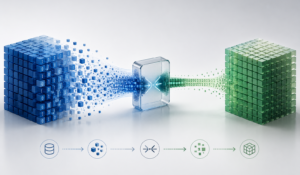
Compressing LLMs without Compromise
LLM execution requires moving gigabytes of data, which includes static model weights, the generated KV cache, and other intermediate representations. Depending on the deployment, this may involve communication across the network, PCIe links, accelerator links (e.g.,...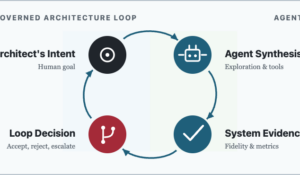
When AI Enters the Architecture Design Loop, What Counts as a Contribution?
AI is starting to shape architectural mechanisms, workloads, and evaluation. To make sense of it, we need a compact, shared way to preserve enough of that process for other groups to evaluate and build on AI-assisted claims. At the 53rd ISCA in Raleigh, AI for...
ISCA 2026 Trip Report
The conference The 53rd International Symposium on Computer Architecture (ISCA) was held at the Raleigh Convention Center in Raleigh, North Carolina, from June 27 to July 1, 2026. Raleigh sits at one corner of the Research Triangle, anchored by North Carolina State...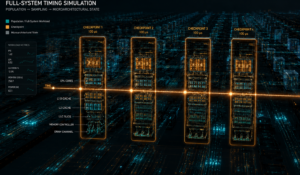
The Return of Rigorous Full-System Timing Simulation
Accurate timing simulation remains one of the most important tools in computer architecture, but modern systems have made cycle-level simulation increasingly impractical. Today’s platforms combine many-core CPUs, deep memory hierarchies, accelerators, complex I/O, and...
Agentic Security: Lessons from Computer Architecture
When an agent makes an incorrect guess, the obvious mistakes like bad files or stale outputs are straightforward to see. However, there are less visible leaks that pose significant risks, such as timing patterns or cached context. The context and data exchanged between tools, services, and third-party systems can also be problematic. This situation becomes particularly concerning when AI agents take action before fully understanding the task at hand. This leads to an important question: Who holds the responsibility for addressing the residue left behind by agentic mistakes?
Subscribe