

Archive of posts tagged: Accelerators

PipeOrgan: Modeling Memory-Bandwidth-Bound Executions for AI and Beyond
TL;DR: Latency-tolerant architectures, e.g., GPUs, increasingly use memory/storage hierarchies, e.g., for KV Caches to speed Large-Language Model AI inference. To aid codesign of such workloads and architectures, we develop the simple PipeOrgan analytic model for...
Efficient GEMM Kernel Designs with Pipelining
General Matrix Multiplication (GEMM) is a fundamental operation in machine learning and scientific computing. It is the classic example of an algorithm that benefits greatly from GPU acceleration due to its high degree of data parallelism. More recently, efficient...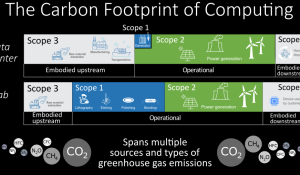
Reducing Embodied Carbon is Important
A recent post raises awareness of the challenges of reducing operational carbon, while also controversially challenging the importance of embodied carbon. We rebut the arguments raised against using embodied carbon as a design metric and conclude by advocating for more research on reducing embodied carbon.

Why Embodied Carbon is a poor Architecture Design metric, and Operational Carbon remains an important Problem
I. Embodied Carbon Recently, embodied carbon, defined as the Scope 3 GHG emissions that arise from the manufacturing processes that lead to computing electronics, has become popular as an architectural metric for sustainability. If you are considering it or using it,...Subscribe