
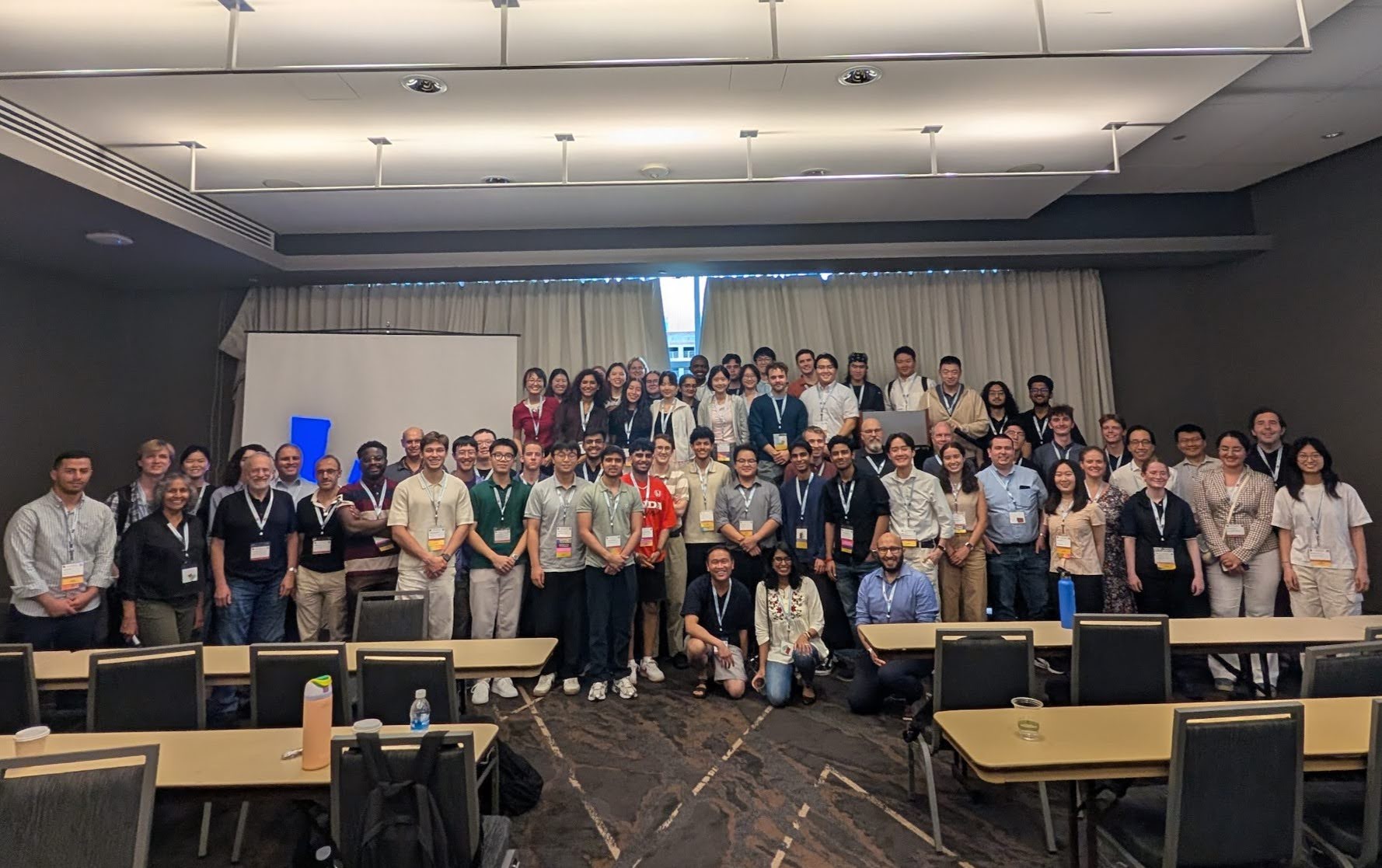
The uArch 2026 Cohort
The 8th annual Undergraduate Architecture Mentoring (uArch) Workshop took place alongside the International Symposium of Computer Architecture (ISCA) 2026, in Raleigh North Carolina. Each year, uArch introduces undergraduate and early master’s students to research and career paths in computer architecture through technical talks, sessions on graduate school life, and mentoring panels on graduate admissions and navigating the research landscape.
More importantly, uArch is about connecting students with the broader computer architecture community. Students meet researchers from academia and industry, learn about their experiences, and get a glimpse of the community they might one day join. Besides the uArch workshop itself, students also participated in the Meet the Senior Architect program and attended the main ISCA conference, giving them the opportunity to engage with this community throughout the week.
For many students, these interactions were one of the most memorable parts of their experience. As Mihir Mahesh, an attendee from the University of Maryland, put it, “It was very interesting to see how different professors and industry researchers at varying universities and companies formed a community with one another under the shared interest of research.” Similarly, Jerry Huang, from UCLA, described the welcoming environment as a big factor in making ISCA a positive experience for students like him, where it was easy to meet and strike up a conversation with everyone from undergraduates and graduate students to academic researchers and industry architects.
For Abby Quesnell, a junior at the University of Wisconsin-Madison, uArch also made her “more aware of [her] career options and what some of those different paths look like for industry vs. PhD vs. Master’s.” For some students, uArch helped clarify their plans for graduate school. Vadym Musiienko of Pomona College, who is applying to PhD programs soon, said that uArch “showed me exactly what I’m signing up for, which made it easy to commit.”
In this post, we take a closer look at how uArch is organized and what the workshop looks like from the student perspective.
Outreach
Organizing uArch starts well before the workshop itself. Each year, the organizing team reaches out to faculty in computer architecture and systems to share the workshop with their students and encourage applications. We also work to expand outreach to universities in regions connected to the ISCA host location. We are especially grateful to the ISCA 2026 General Chairs for their continued support in helping us reach students and organize this year’s workshop.
For uArch 2026, more than 80% of in-person attendees came from North America, representing 30 unique schools. We also offered two types of travel grants to help make participation more accessible. Matching grants allowed faculty or universities to contribute toward a student’s travel costs alongside uArch funding, while full grants covered the costs through uArch funds.
Attendees
As in previous years, we were thrilled to receive many impressive applications from students around the world. With limited funding and capacity, we ultimately welcomed 41 students in person. As part of the application process, students submitted a statement of interest describing their background, their interest in graduate education, and what they hoped to gain from uArch. The organizing team reviewed these applications to build a cohort of students with diverse backgrounds and interests.
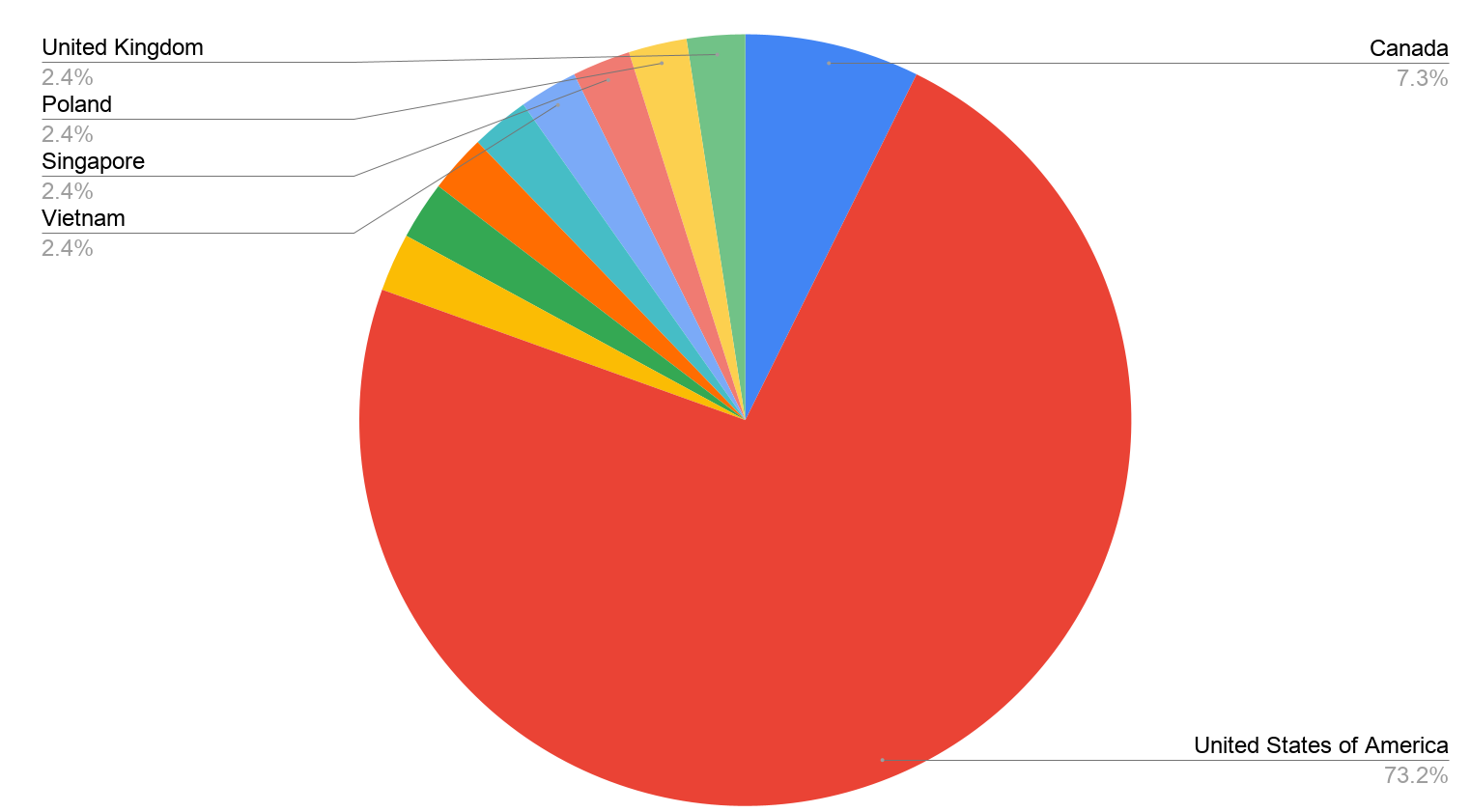
Pie chart showing the countries represented among selected in-person applicants to uArch 2026.
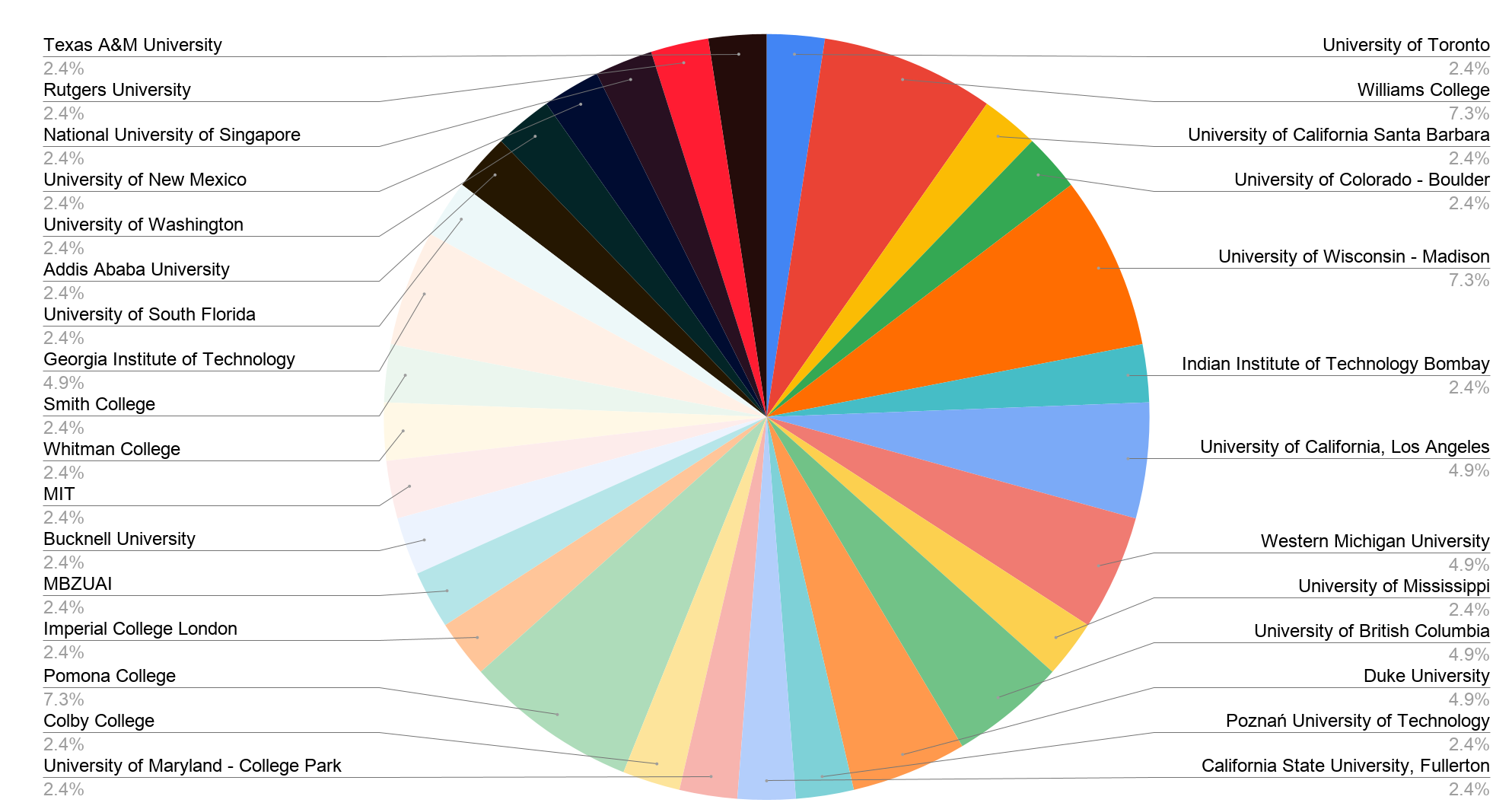
Pie chart showing the schools represented among selected in-person applicants to uArch 2026.
While our cohort spanned a wide range of institutions, significant opportunities remain to broaden global participation, particularly among universities outside North America. Expanding that reach will require continued outreach and support from the broader computer architecture community.
How can the community help
Sponsor more matching-grant students: Matching grants allow faculty and universities to share the cost of bringing students to uArch. If you know talented undergraduate or master’s students who are excited about research, consider supporting their participation.
Industry sponsorship: We are grateful to our sponsors, ACM SIGARCH, Google, AMD, Cerebras, and Microsoft, as well as the faculty members who contributed to the matching-grant program. Additional support from industry and academia would allow us to bring more students to uArch and broaden participation.
Join the organizers club: uArch is always looking for people interested in helping organize and grow the workshop. Organizers contribute to application review, programming, logistics, and session facilitation. We also welcome graduate students interested in serving as mentors before and during the workshop.
uArch 2026
This year’s uArch workshop opened with a keynote from Professor Chris Fletcher of UC Berkeley on new directions in computer architecture in the age of agentic AI. For Vadym, hearing researchers reflect on how AI is changing their work was particularly memorable: “Hearing working researchers say how they’re adapting to it, and what still worries them, wasn’t something I expected going in.”
For several students, the keynote also changed how they thought about getting started in research. Abby described how AI could lower some of the barriers that make research feel intimidating to undergraduates:
“Research as a general topic is intimidating because most research papers are highly technical. It seems difficult to break into that level of knowledge and create your own new ideas. AI makes that barrier seem lower, as it can help guide you through research.”
Mihir summarized another key takeaway from the discussion: “The limits of research are not in technical skills and experience, but rather in ideas.”
The program then moved into three panels: “The Route to Graduate School,” “Life in Graduate School,” and “Life After Graduate School.” The panels gave students an opportunity to hear directly from faculty and graduate students about applications, graduate life, and careers.
For students like Jerry who are considering graduate school, the application process can feel overwhelming. As he put it, “Hearing from the grad students about their experiences so far, and from the professors about applications, helped break down the process … and ease some nerves.”
For Mihir, the “Life in Graduate School” panel “put grad school in a much more realistic light, as the panelists shared a lot about their own lives, both the good and bad.” The discussion showed him that “a PhD is not as linear or straightforward as it seemed to [him] initially,” and that everyone has their own timeline.
The workshop concluded with 15-minute round-robin office hours, where students met with faculty to ask about research, careers, and graduate recruitment. We are grateful to the faculty members whose time and perspectives made these conversations possible.
For Jerry, conversations with Professor Joel Emer and Professor Callie Hao clarified the connection between computer architecture and chip design. Interested in both areas, he was glad to hear that “I won’t have to choose – neither are escapable if I want to be a proficient architect or chip designer.”
For Vadym, the conversations also offered a chance to learn about the people behind the research: “I got to hear how they got where they are, not just what they work on. All of them were honest and generous with us, and a few of those conversations could turn into a future advisor.”
For the full schedule and details, visit the workshop program page.
Support from the Community
We greatly appreciate the community’s continued support. uArch would not be possible without the time, effort, and enthusiasm of the keynote speakers, panelists, faculty members who held office hours, student mentors, and ISCA General Chairs. This collective effort allowed us to reach students from around the world. We extend our sincere gratitude to everyone in the community who helped make this year’s uArch workshop a success.
About the Author:
Irene Wang is a PhD student at the Georgia Institute of Technology. Her research interests focus on designing computing systems to enable scalable and efficient AI datacenter infrastructure.
We would also like to thank the students, Mihir Mahesh, Jerry Huang, Abby Quesnell, and Vadym Musiienko, who volunteered to contribute to this year’s blog post. Their reflections and perspectives give us a chance to see uArch through the eyes of the students it is designed to support.
Disclaimer: These posts are written by individual contributors to share their thoughts on the Computer Architecture Today blog for the benefit of the community. Any views or opinions represented in this blog are personal, belong solely to the blog author and do not represent those of ACM SIGARCH or its parent organization, ACM.